College Students Are Smoking Tons of Weed in Legal States and Binge-Drinking Far Less
By Elias Marat
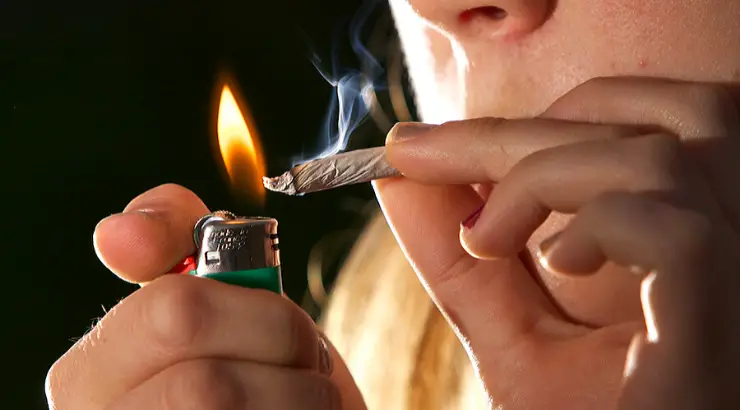
The legalization of recreational marijuana in states across the U.S. is leading students to puff, puff, and pass on the booze.
A new study suggests that undergrad students in those states where cannabis is legal are smoking weed more and binge drinking less.
The Oregon State University study published this week in the journal Addictionfound that legalization has blazed a trail for a steady increase of college-aged pot smokers—both frequent tokers and those who smoke only occasionally—who opt not to imbibe of booze at the Animal House rates of yesteryear.
The study looked at the smoking habits of college students aged 18 to 26. The researchers found that many students in states where the plant has been legalized are opting for cannabis over alcohol, meaning that cannabis smokers are “less likely to binge drink.” Researchers defined binge drinking as having five or more drinks in a single setting.
Students in states that have legalized cannabis were found to be 46 percent more likely to have smoked the sensimilla—a highly concentrated type of cannabis—than their peers who smoked six years prior during the prohibitionist era.
The study noted that the effect was more pronounced among students aged 21 to 26 rather than those aged 18 to 20. It added:
“In US states that enacted recreational marijuana legislation from 2012 to 2017 [such as Washington and Colorado], there was evidence for a general trend towards greater increases in marijuana use.”
The trend appears to be a reversal of the traditional rite of passage where students who reach the age of 21 take a turn toward aggressive boozing.
In a press release, Zoe Alley—an OSU doctoral candidate and author of a companion study—said:
“In most states, once you reach in a press release 21, a barrier that was in the way of using alcohol is gone, while it’s intact for marijuana use. But when marijuana is legal, this dynamic is changed.
For marijuana we saw state-specific increases that went beyond the nationwide increases, whereas binge drinking was the opposite: a greater decrease in the context of nationwide decreases.”
The findings came as a surprise to the study’s authors who said that they need to further study why legalization has had this impact. Study author David Kerr said:
“It is surprising and important that these young adults are sensitive to this law. And it’s not explained by legal age, because minors changed, too.”
According to cannabis reform advocacy group NORML, twenty-five states and the District of Columbia have either legalized or decriminalized possession and use of marijuana for adults over the age of 21, while medical marijuana is legal in 33 states.
Recent data from the Pew Research Center shows that two-thirds of the public in the U.S. favors the legalization of cannabis—a sure sign of the anti-prohibitionist mood of most Americans and especially millennials.
Does a Strong Immune System Make Colds Worse?
How Measles Vaccines Protect You From Other Diseases
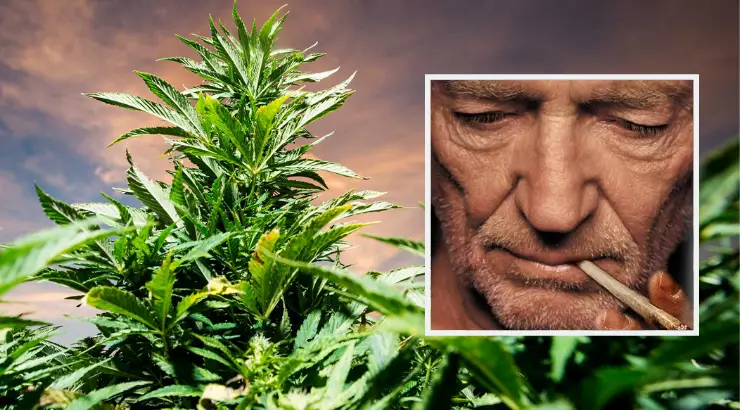
Willie Nelson Joins the Fight Against a Corporate Takeover of the Cannabis Industry
By Waking Times
Thirty-five years ago, as Willie was playing his music at Live Aid, a benefit concert for those affected by the famine in Ethiopia, he had the idea for a benefit concert that supports local farmers.
But Bob Geldof, the organizer of Live Aid at the time, thought that his proposal was a “crass, stupid, and nationalistic” conflation of the two issues. As Willie listened to him downplay the importance of farmers affected by a drought, bankruptcy, and a corporate takeover of the industry, it only solidified his desire to start his own concert, thus Farm Aid was born.
In their first year, Farm Aid included artists such as Johnny Cash and B.B. King and raised over $9 million for down-and-out American farmers.
“We were losing like 300 farmers a week” to suicide, Nelson recalls. “[But] things are a little better now. People have started thinking about buying and growing sustainably.”
Since Farm Aid began, a paradigm shift has occurred. People are now talking about sustainable agriculture, permaculture, and organic food, and the likes of Big Tobacco, Big Agriculture, and Big Biotech have become stains on American identity.
Willie Nelson was as much a player in this cultural shift as anybody, but he knows that the battle isn’t over yet. In recent years, Willie has set his sights on something very near and dear to him, marijuana.
As a life-long marijuana smoker, Willie Nelson has a deep concern about the way that cannabis is grown and distributed. Out of this passion for weed came the start-up company Willies Reserve, a company started by Willie and investor Andrew Davison that seeks to bring social responsibility into the pot market.
“I really believe in the environmental aspect of this. It’s a great way to revitalize small farms, and I want to make sure that any product we grow is as clean as we can make it and that, wherever possible, we’re trying to lower the environmental impact of our operations.’” – Andrew Davidson on Willie Nelson’s response to his proposal.
The legalization movement was founded on the values of justice, liberty, and health. Many people, often disproportionately black, have been thrown in jail for victimless crimes relating to cannabis. Although marijuana is now legal to smoke in many places, it is not always legal to grow or sell. In order to do so, you must get a medical permit, or a cannabis business license respectively, in which the government is handing out very few.
“It looks a lot like the concentration of capital that we have seen with Big Alcohol and Big Tobacco. I think that’s problematic for cannabis-law reformers, because it plays into our opposition’s strongest argument.” – Alison Holcomb, drafter of the original cannabis legalization law in Washington State
Big Pot has also begun using harmful pesticides, none of which cannabis activists and consumers ever desired to smoke. Prior to legalization, black market growers typically would not use any pesticides because the quantity of plants tended to be low.
“But when you’re investing millions of dollars in a large cultivation center, you can bet they are not going to take the risk of their crop getting wiped out by mold or mildew or insects.” – Keith Stroup, founder of the National Organization for the Reform of Marijuana Laws
Oddly enough, there are no chemicals approved for use on the cannabis plant. This tends to mean however, that companies are using whichever chemicals they want without much oversight. These chemicals include Avid, Floramite, myclobutanil, and imidacloprid, which professor of entomology at Colorado State University Whitney Cranshaw claims actually develops more mites on the plants.
To make matters worse, labels such as “clean” and “natural” have a striking resemblance to the Big Food term “all natural,” in that there are few regulatory requirements resulting in meaningless labeling used solely to market products as less dangerous than they actually are.
Although Willie Nelson has recently announced his retirement as a weed smoker, he is still in charge of his company and is rumored to take edibles frequently. However, he has stated before that he “[doesn’t] like edibles that much.”
“I had a bad experience the first time I did it. This was 50 years ago. I ate a bunch of cookies, and I lay there all night thinking the flesh was falling off my bones.” – Willie Nelson
Willie’s Reserve empowers local farmers by allowing them the Willie Nelson branding in exchange for particular rules they must follow, such as restrictions on pesticide use and that they must be small companies. This ensures quality weed and empowers small businesses seeking to compete with the big names like Privateer Holdings and Diego Pellicer.
“They [consumers] want to know where the product comes from, they want to know it’s clean and cared for, they want to know it was local grown and that it has a connection to their community.” – Andrew Davidson
Willie has another enemy in the pot industry, GMO Marijuana. In one of the biggest moves to consolidate power in the cannabis industry to date, Bayer and Monsanto are maneuvering to take over the cannabis industry with genetically modified strains, which you can only grow if you have a license from the company.
“These problems could have been fixed on the first day, but you have a lot of bureaucracy and bullshit, a lot of big corporations. So that’s what we’re up against. They’re trying to monopolize it all. That’s horseshit. That ain’t right, and we’ll do everything we can to keep that from happening.” – Willie Nelson
Placebos Work Even If You Know They’re Placebos!
The FDA Just Approved a New Drug Application for Cocaine-Based Nasal Spray

By John Vibes
In a shocking drug approval last year, the U.S. Food and Drug Administration (FDA) approved a ketamine-based nasal spray for treating depression. The news was surprising considering the history that the substance has as a snortable club drug and the strict policy of drug prohibition and regulation in the U.S. However, in the short time since, Ketamine is slowly becoming more respected as a legitimate treatment for depression in clinical settings.
Meanwhile, other nasal sprays for drugs that were once considered illicit are beginning to reach the market as well.
As the Mind Unleashed reported last month, a pharmaceutical company called Silo Wellness announced that they were developing a nasal spray for psilocybin, the active ingredient in many of the most popular “magic mushrooms.” The psilocybin-based spray is also intended to be used as a treatment for depression.
Now, in the most shocking FDA approval yet, the agency has approved a cocaine-based nasal spray for use as an anesthetic.
In a January 13 press release, Lannett Company Inc. announced that the FDA approved a New Drug Application (NDA) for the cocaine-based nasal spray which is intended to be used as a local anesthetic for surgeries in the nose cavities.
The drug is called NUMBRINO and is comprised of a patented nasal solution which contains cocaine.
Lannett CEO Tim Crew says that the company is planning full clinical trials to prove the effectiveness of the drug.
“The FDA’s approval of our Cocaine HCl product, the first NDA approval to include full clinical trials in the company’s history, marks a major milestone in Lannett’s 70+ years of operations. We believe the product has the potential to be an excellent option for the labeled indication. We expect to launch the product shortly, under the brand name NUMBRINO®,” Crew said in the press release.
Variations of the cocaine-based solution were tested on 159 patients during the interventional clinical trial. In the treatment of these patients the investigators tested a placebo topical solution against cocaine hydrochloride 4% or 10% as an aesthetic prior to a diagnostic procedure, according to MDMag.
There are certainly many more regulatory challenges that Lannett will need to face in order to bring this drug to market, but the FDA approval of their NDA shows that the drug meets all of the agency’s requirements in the process thus far and that they have a good chance of full market approval.
The Science of Anti-Vaccination
World’s First Malaria Vaccine Released!
Why Do People Freak Out About MSG?
Fun fact: MSG is a lower-sodium salt and less is needed to bring out flavors, therefore it is great for low-sodium diets!
 Agorist Health