“Is Porn Addiction Real?” Discussed on The Doctors

By The NoFap® Team
The Doctors, a popular television show, covered porn addiction on October 30, 2019.
In the first and second segments of the episode, guests Alex Rhodes (yes, from NoFap) and Dr. Robert Weiss (a clinical sexologist), along with the show hosts, discussed whether or not porn addiction is real.

Alex Rhodes was just 11-years-old when he started to use Internet pornography.
He says that his habit of looking for photos of women online quickly escalated from innocent curiosity to a full-blown compulsion.
He went on to explain that it was a genital injury, notreligious or moral issues about porn or masturbation (he was never religious), that made him initially question whether or not his excessive Internet porn habit was healthy. He described that the out-of-control use impacted every area of his life up until and including when he started engaging in romantic relationships with young women – and when that happened, he couldn’t maintain sexual arousal with a real person! (which we now know as porn-induced erectile dysfunction and anorgasmia)
Alex Rhodes spent years discussing these issues online across various websites, which led him to eventually create NoFap, a community-centered website for recovering porn addicts and people suffering from compulsive sexual behavior.
Should compulsive porn use be classified as a behavioral addiction?
Dr. Judy, one of the show’s hosts, was hesitant to immediately jump to classifying compulsive porn use under the behaviorial addiction model. However, she was compassionate and understanding of the issues that were raised and simply wants more research to be conducted on the subject, saying that this issue is current in its infancy. By the end of the segment, it seemed that everyone was in agreement that it’s a problem that children and young teens are often getting exposed to unlimited amounts of Internet pornography long before they have their first relationship.
Is porn addiction real?
We certainly think so. There’s an abundance of research that clearly places compulsive pornography usage into the realm of the addiction model, including neurological studies and brain imaging heralding brain changes such as hypofrontality, sensitization to porn cues, and desensitization. Not to mention 100s of other pieces of research, surveys, and case studies that link compulsive Internet porn use to an array of negative side effects, including decreased sexual satisfaction, decreased relationship satisfaction, and even porn-induced erectile dysfunction.
Regardless of what you call it – a compulsion or an addiction – hundreds of thousands, if not millions, of people around the world are suffering from the effects of it. Many of these same people are experiencing tremendous benefits from making one change in their lives: quitting porn or at least drastically reducing their porn use. We appreciate The Doctors for inviting NoFap’s Alex (or Alexander) Rhodes on to discuss this important issue. Please consider thanking them for featuring this important issue under our tweet:
“Is porn addiction real?”
NoFap’s Alexander Rhodes, who started compulsively using Internet porn at just 11-years-old, will be telling his story on @TheDoctors tomorrow.
For local listings, visit https://t.co/DYpUjHxazG. #TheDoctorspic.twitter.com/VyENpe1CWe— NoFap (@NoFap) October 29, 2019
Coronavirus: Myths, Pseudoscience, and Racism
“Forever Chemicals” in Our Drinking Water? Don’t Panic!
The Link Between the NFL and Brain Disease
Is Pornography Addictive?
What is Endometriosis?
Can You Inherit Fear?
Move Over, Marijuana: Psychedelic Drugs Could Be the Next Big Thing

By Aaron Kesel
Several companies that are developing medical treatments from psychedelic drugs like LSD, ketamine, and psilocybin—the active ingredient in magic mushrooms—are getting ready to list on Canadian stock exchanges.
One of those companies, Mind Medicine Inc., has been involved in clinical trials of psychedelic-based drugs and aims to list on Toronto’s NEO Exchange by the first week of March, JR Rahn, the company’s co-founder and co-chief executive officer, told Bloomberg.
“Our ambition is to be one of the first publicly listed neuro-pharmaceutical companies developing psychedelic medicines,” Rahn said in an interview.
And Mind Med Inc. isn’t the only company reaching into the deep waters of developing psychedelic medicines. There are a growing number of companies that are conducting or beginning to administer clinical trials of psychedelic treatments for things like depression to post-traumatic stress disorder (PTSD). Some trials have even received the blessing of the U.S. Food and Drug Administration.
In late 2018, the FDA stated that psilocybin was a “breakthrough therapy” via a drug developed by London-based Compass Pathways Ltd. for clinical depression.
Mind Med Inc. is preparing for a second clinical trial into the use of a non-hallucinogenic drug based on a psychedelic called ibogaine to treat opioid addiction, which will be conducted in New York and overseen by the FDA, according to a report.
A third company, Field Trip Psychedelics Inc., is also involved with researching psilocybin at the University of the West Indies in Jamaica.
Last year TMU reported that psilocybin, the substance found in 200+ species of magic mushrooms, may be the next health and legalization trend following cannabis. Unlike research into the use of cannabis, which is still federally illegal in the U.S., the work that psychedelic companies are doing is entirely legal. This means that companies don’t have to jump through legal barriers to research the effects and benefits of these drugs.
TMU has previously reported on the benefits of psychedelics used in the form of medication, often in conjunction with therapy. For example, studies in recent years have shown that psychedelic compounds can be used for a variety of different things including reviving someone from a vegetative state, reducing violence, reducing the chance of losing brain functions later in life, reseting the brains of those diagnosed with depression, and improving one’s mental health.
Another study TMU previously reported on found that psychedelic use doesn’t have a link to mental health problems or suicidal behavior, unlike alcoholic beverages.
Benny Shanon, professor of cognitive philosophy at Hebrew University, believes the theory that Mosses was high on psychedelics when he spoke to god. There exists a similar theory about the seer Michel de Nostredame. While these things cannot be proven, studies have shown that psilocybin increases creativity.
Scientists Discover Cannabis Compound That Could Be 30 Times More Potent Than THC
By Elias Marat
Are you tired of puffing on flower? Can’t quite afford to lay down the cash for a dabbing rig? Uninterested in the usual edibles?
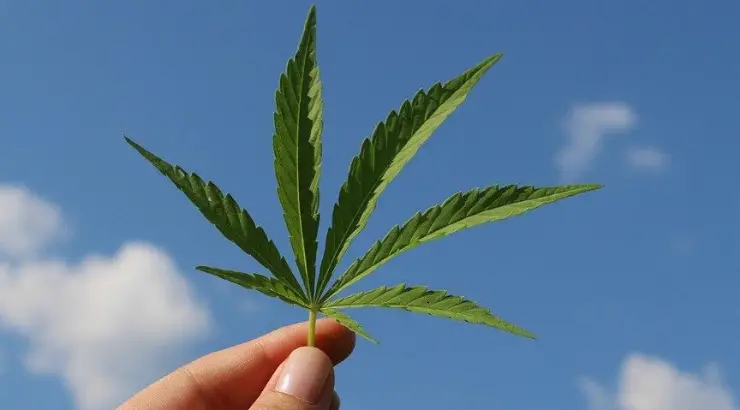
Well, Italian scientists have discovered a previously unknown cannabis compound that has been shown in lab tests to be potentially 30 times stronger than tetrahydrocannabinol (THC), the psychoactive compound in THC that gets you high.
Whether the new cannabinoid—named tetrahydrocannabiphorol, or THCP—has any intoxicating effects at all, remains an open question.
The Italian researchers also discovered another previously unknown compound named Cannabidphorol, or CBDP. The compound is apparently a close cousin of CBD, the medicinal compound that has gained a surge of attention in recent years for its antioxidant, anti-inflammatory and anticonvulsant properties.
Authors of the report, which was published in the journal Nature, estimated the effects of THCP by observing its ability to bind to human cannabinoid receptors that impact the entire nervous system. THCP bonds stronger than THC by about 33 times.
The discovery has scientists wondering if THCP could explain why some cannabis strains pack such a powerful punch that can’t be explained by the presence of THC and CBD alone.
Lead study author Cinzia Citti told CNN:
“This means that these compounds have higher affinity for the receptors in the human body.
In cannabis varieties where THC is present in very low concentrations, then we can think that the presence of another, more active cannabinoid can explain those effects.”
Additionally, research has shown that the molecular chain of almost 150 cannabis compounds is only five atoms long versus THCP’s seven. The study marks the first time that atom chains exceeding five has been observed in any naturally-observing cannabinoid—hinting at the possibility that THCP could be the most potent compound ever discovered in the plant.
The discovery of the new compound could hint at the presence of even more previously-unknown compounds as well as potential new medical benefits of cannabis.
Jane Ishmael, associate professor in Oregon State University’s College of Pharmacy, said:
“There are other minor cannabinoids and traces in the plant that can be hard to study, but by isolation we can continue to assess the effects they might offer.
Historically, many of our medicines have been derived by or inspired by natural products. By having new compounds that bind with very high affinity, that will give scientists a new probe into biological sciences.”
 Agorist Health